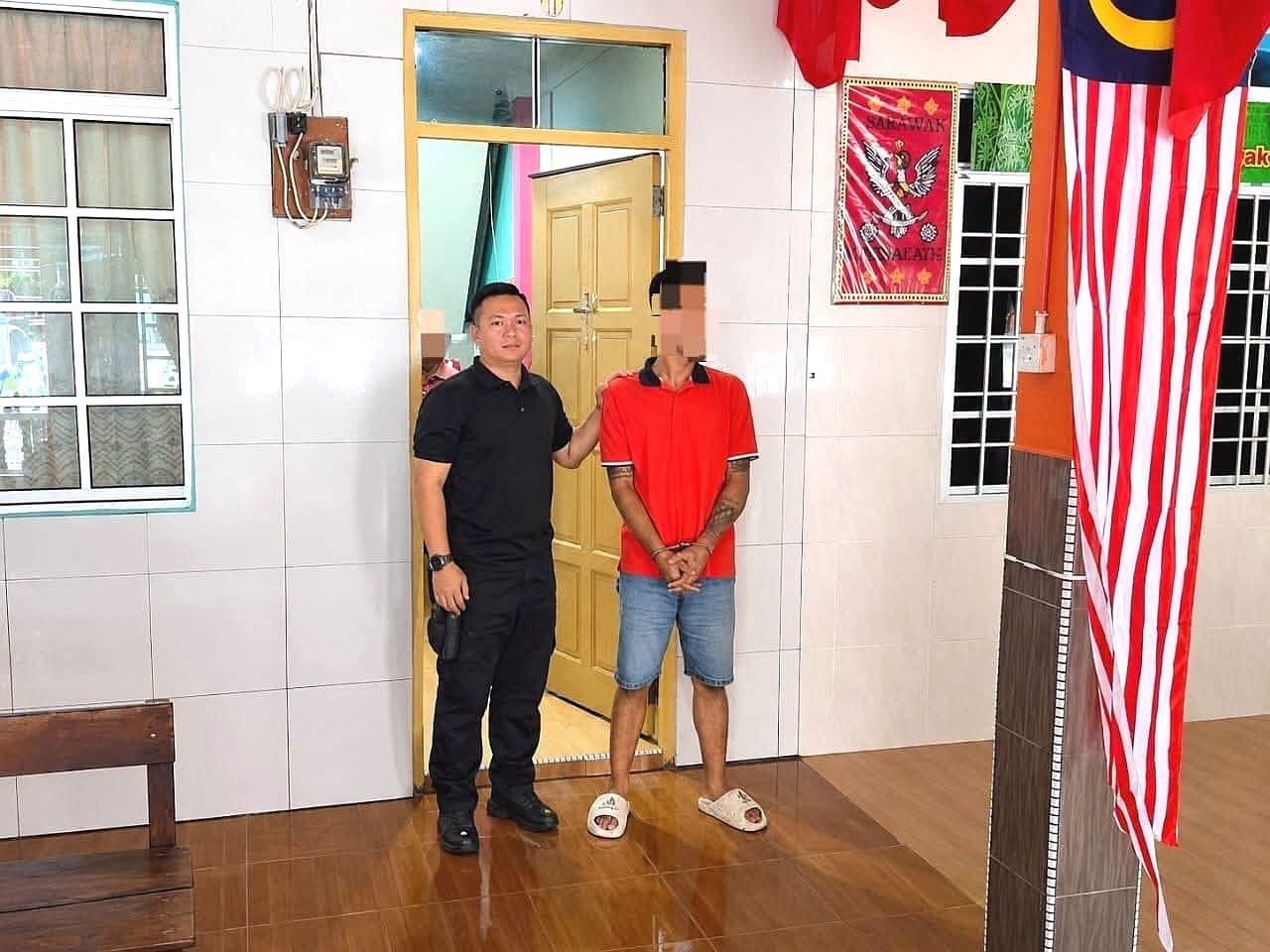
KOTA KINABALU, Nov 18 — Malaysia's Immigration Department has dismantled a suspected online scam syndicate operating out of a luxury bungalow in Damai here, arresting 12 Chinese nationals and seizing more than 150 mobile phones.
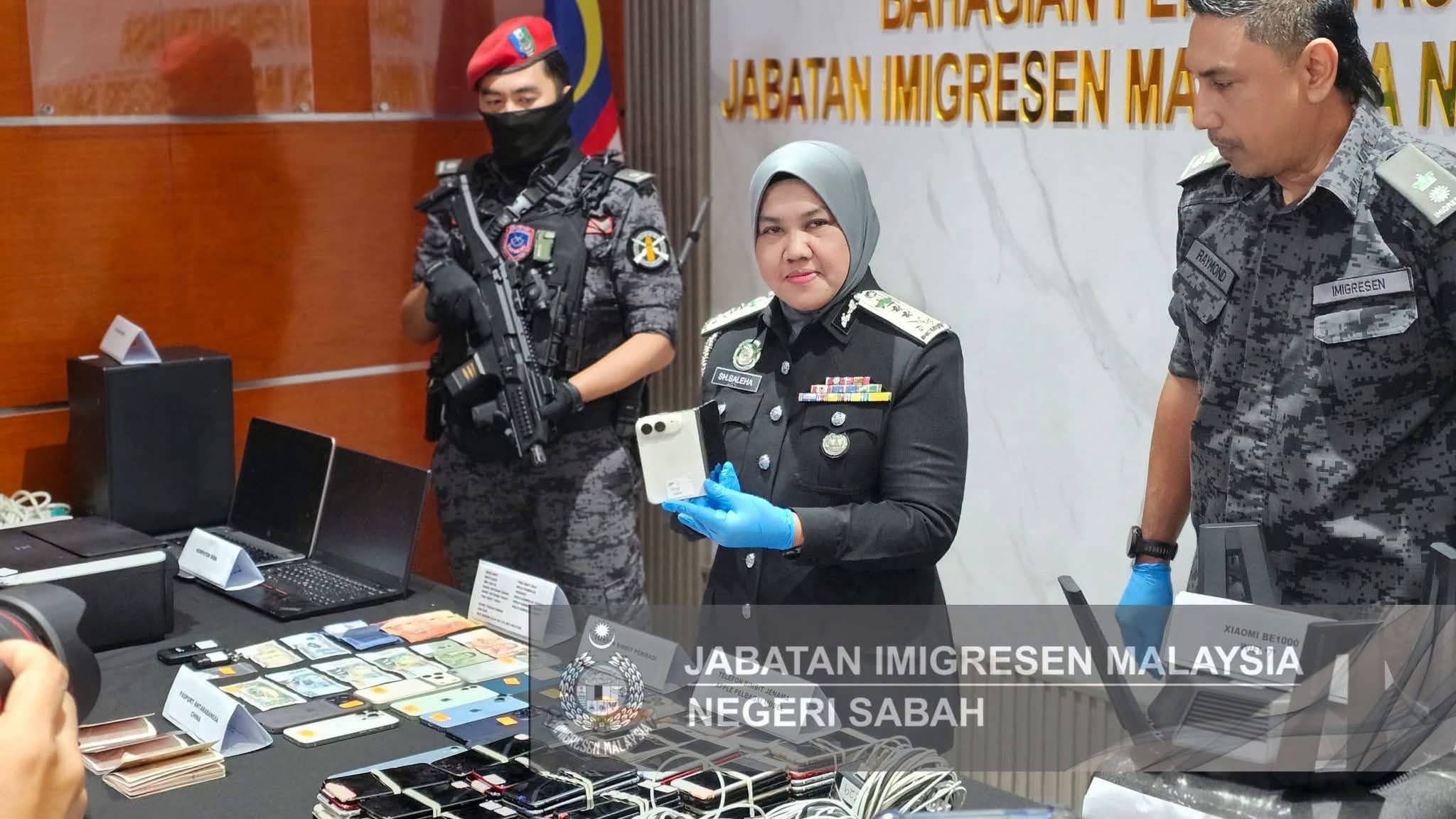
Sabah Immigration Department officials display some of the seized items, including smartphones, laptops and routers, following a raid on a suspected online scam hub in Damai, Kota Kinabalu - Photo: Sabah Immigration Department
The raid, codenamed Ops Serkap, was carried out at around 11:00 am on Tuesday by 42 enforcement officers from the Sabah Immigration headquarters following a week-long intelligence operation.
According to the department, the 12 male suspects, aged between 20 and 43, had entered the country using social visit passes and are believed to have been running online fraud activities from the residence.
Ten of the men are being investigated under Section 6(1)(c) of the Immigration Act 1959/63 for lacking valid passes or permits. One suspect is detained under Section 15(1)(c) for overstaying, while another faces investigation under Regulation 39(b) of the Immigration Regulations 1963 for breaching pass conditions.
During the sweep, officers confiscated 153 Apple mobile phones of various models, 11 computers, a central processing unit, a printer, 13 routers, 22 SIM cards, seven USB chargers, seven power supply units, three Chinese passports, and mixed-currency cash totalling RM184.15.
All 12 detainees have been placed at the Kota Kinabalu Immigration Depot for further investigation.
In a separate enforcement action on November 5, immigration officers in Keningau arrested two Chinese nationals at the local Tamu Ground for pass violations under Regulation 39(b).
Preliminary investigations revealed that one of the individuals held a valid work pass as a construction engineer but had breached its terms by selling goods at the open-air market.
Sabah Immigration reaffirmed that it takes a strict stance against pass abuse and foreign involvement in cybercrime, urging members of the public to continue reporting suspicious activities to safeguard public security.